


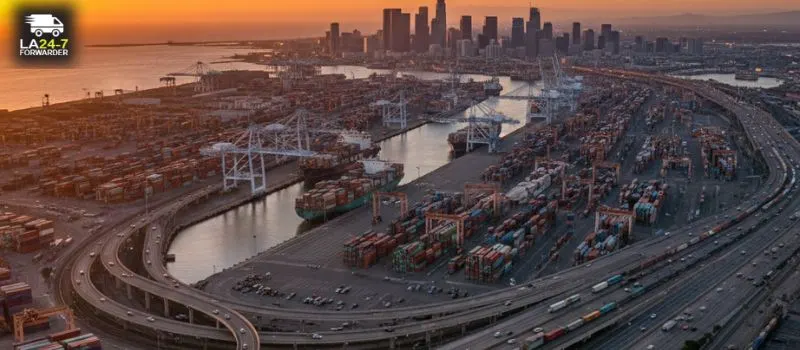
Los Angeles is widely recognized as one of the most important freight and logistics hubs in the United States. Its strategic coastal location, world-class port infrastructure, and strong intermodal transportation network make it a vital gateway for global trade.
From international imports to domestic distribution, Los Angeles plays a central role in keeping supply chains moving efficiently.
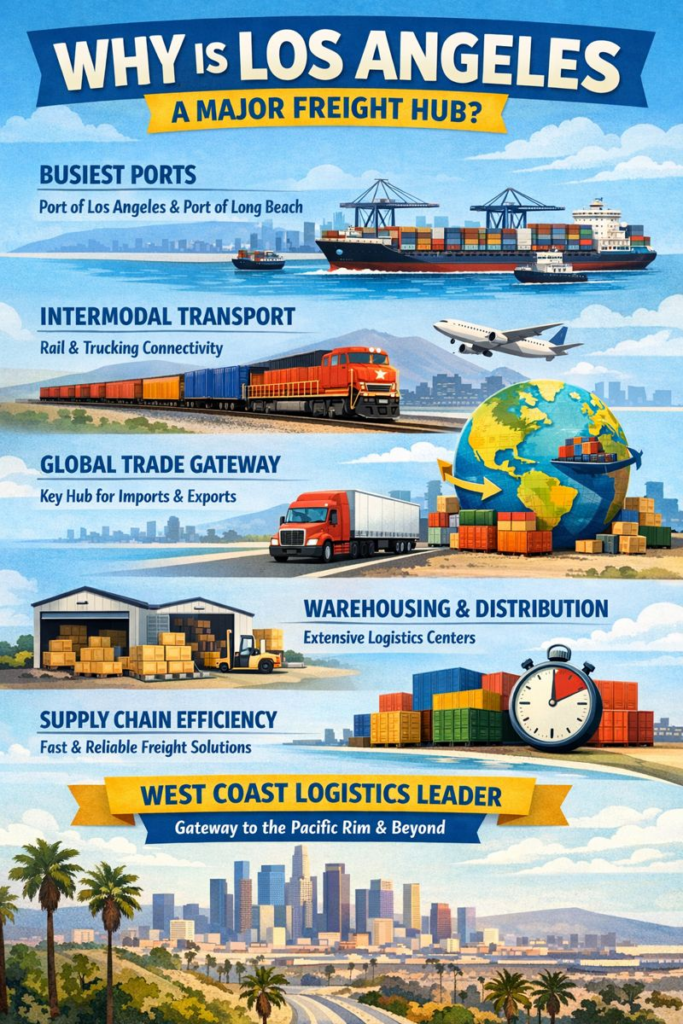
Home to the Nation’s Busiest Ports
The Port of Los Angeles and the Port of Long Beach together form the largest port complex in North America. These ports handle a significant share of U.S. containerized cargo, particularly goods arriving from Asia.
These ports support a wide range of freight services in Los Angeles, including container shipping, bulk cargo, and specialized freight handling. Their scale and efficiency position in Los Angeles as a primary global trade gateway on the West Coast.
Strong Intermodal Transportation Network
One of the biggest advantages of Los Angeles as a logistics hub is its intermodal transportation system. Freight moves seamlessly from ships to rail and trucking networks, allowing goods to reach inland destinations quickly.
Major rail providers connect the ports to national rail corridors, while an extensive freeway system supports high-volume trucking. This rail and trucking connectivity ensures fast and cost-effective freight movement across the United States.
Global Supply Chain Support
Los Angeles plays a crucial role in supporting global supply chains, particularly for industries that depend on international sourcing. Retail, automotive, electronics, apparel, and manufacturing sectors rely heavily on shipping and logistics services in Los Angeles to move goods efficiently.
The region’s ability to handle high cargo volumes, combined with advanced logistics technology, improves supply chain efficiency and reduces delays.
Warehousing and Distribution Infrastructure
The greater Los Angeles area is home to thousands of warehousing and distribution centers, especially in areas like the Inland Empire. These facilities support storage, order fulfillment, and last-mile delivery for both domestic and international shipments.
This concentration of warehouses allows businesses to distribute goods rapidly to major consumer markets across California and beyond.
West Coast Logistics Leadership
As a leading West Coast logistics hub, Los Angeles benefits from skilled labor, freight-focused infrastructure investments, and continuous port modernization. Its position as the first U.S. port of call for many trans-Pacific shipments further strengthens its role in international freight movement.
Ready to Move Your Freight Through Los Angeles? Contact us
Los Angeles is the heart of U.S. logistics, offering unmatched port access, fast inland transportation, and efficient supply chain solutions. LA 247 Forwarder helps businesses move cargo smoothly through the Port of Los Angeles and beyond with reliable, end-to-end freight services tailored to your needs.
Contact us today by calling (800) 648-9889 to streamline your shipping, reduce delays, and keep your supply chain moving with confidence.
Frequently Asked Questions (FAQs)
Why is Los Angeles considered a major freight hub?
Los Angeles is a major freight hub due to its large port complex, advanced intermodal transportation network, and proximity to global trade routes connecting Asia and North America.
What role do the ports of Los Angeles and Long Beach play in freight?
The Port of Los Angeles and Port of Long Beach handle the highest volume of containerized cargo in the U.S., serving as the primary entry point for imports and exports on the West Coast.
How does Los Angeles support global supply chains?
Los Angeles supports global supply chains through efficient shipping, rail, trucking connectivity, and large-scale warehousing that ensures fast movement of goods from ports to inland markets.
What industries rely most on Los Angeles freight services?
Retail, e-commerce, automotive, electronics, apparel, manufacturing, and food distribution industries heavily depend on freight services in Los Angeles.
How does freight move inland from Los Angeles ports?
Freight moves inland primarily through rail lines connected to national networks and extensive trucking routes that distribute cargo across California and the rest of the United States.